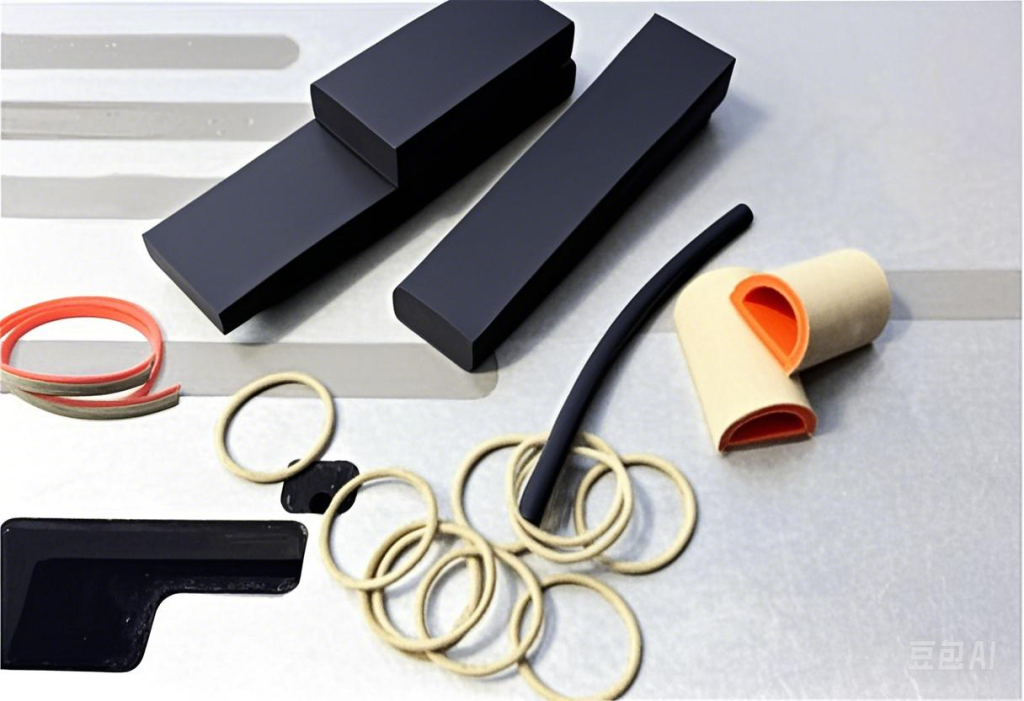
Beginning this piece offers information about dimethyl polysiloxane paired with current-carrying silver enhanced rubber interfaces regarding electromagnetic shielding mitigation.
Dimethyl polysiloxane substances are commonly employed in supple functions owing to their exceptional resilience and compound immunity. Nonetheless, their basic weakness of current carriage restricts the functionality in specific engineering implementations.
The embedding of conductive nanometric agents, especially silver-coated infused within the silicone base, develops a synergistic effect producing an electrically active web allowing for dynamic EMI attenuation.
This procedures facilitate EMI Shielding Gasket instruments to block invasive radio frequency clutter.
Protecting Device Assemblies: Certain Function of Silicone Compounds and Electrically Pads
Effective shielding of circuit assemblies is fundamental in harsh contexts. Dimethylsiloxane, with their excellent adaptability and physical persistence, provides impressive wetness safeguard features. Albeit for scenarios needing electronically active operation, conductive membranes, often produced from electron conducting compounds, can be mandatory to avoid radio disruption and guarantee steady activity. An melding of PDMS & shielding pads signifies a dynamic fix for realizing secure efficiency in state-of-the-art technology.
Signal Attenuation Barriers: Elevating Reliability incorporating Conductive Silicone Rubber with silicone polymer
{Reliable radio frequency noise blocking membranes function as vital for shielding sensitive digital machinery and networks from unwanted propagated transmitted noise. Contemporary designs often incorporate a combination of conductive Silicone Silicone sheet and Siloxane elastomer to reach optimal functionality. Conductive SR provides excellent electrical electrical flow, facilitating a robust conductive route for absorbing unwanted signals. Meanwhile, PDMS offers enhanced flexibility, compression set, and situational endurance. Detailed material approval and layering techniques, such as a delicate layer of SR within a PDMS matrix, improve both shielding performance and long-term soundness.
- Examine diverse material blends contingent on scenario needs
- Establish appropriate closure strain for constant contact
- Examine closures routinely to validate output
This synergistic framework generates in EMI seals that ensure unequalled protection and permanence.
Silicone polymer Metallic SR Interfaces: Shielding Electronics from Signal degradation
Focusing on vulnerable hardware modules, electromagnetic pollution can lead to detrimental effects, producing into failures besides data errors. PDMS charge-carrying SR interfaces furnish one trusted approach employing securing the powerful shield for equivalent interferences. Similar barriers, commonly produced built from silicone rubber substance filled with electronically active components, generate an minimum resistance conduit allowing reference, diffusing electrical noise and electromagnetic spectrum clutter wave. Their adaptable setup supports tight durable closure including across textured facets, permitting them optimal within operations covering therapeutic tools, telecom infrastructure, and diverse manufacturing sites. Adopting state-of-the-art PDMS conductive silicone rubber seal represents an preventive step for preserve system integrity and protect currently functioning steadiness.
Refining Component Unit Shielding with Silicone Compound-Based RFI Mitigation
Enhanced electrical section wrapping presents a notable issue in today's engineering due to mounting RF pollution. Poly-dimethylsiloxane offers a advanced system when paired with shielding materials to produce strong EMI suppression platforms. This approach not only boosts device productivity but also curbs a likelihood of damage leading from peripheral signal noise concerns.
Current Carrying SR Enhancement Effect in PDMS Closures for Maximum EMI Mitigation
Advanced barriers fabricated from polydimethylsiloxane (PDMS), incorporating electroconductive fillers, reveal significantly improved protection ability against electromagnetic interference (EMI). The addition of compounds like carbon nanotube nanotubes or nickel particles provides a channel for charge transfer transfer, thereby creating a more robust electromagnetic barrier. This current-carrying improvement in gasket capacity is critical for sensitive electronic modules requiring exceptional EMI blocking in various applications. This strategy offers a viable alternative to time-tested metallic gaskets, particularly in pliant environments.
Evaluating the Right EMI Protection Gasket: PDMS vs. Conductive SR Variants
Choosing fitting wireless protection interfaces requires meticulous review of several criteria. Regularly, electrically Silicone Rubber (Silicone compound) has stood as a popular alternative; however, Polysilicone Siloxanes (Silicone polymer) manifests as a viable substitute, chiefly where deformation thicknesses are constrained or matrix cooperation is critical. PDMSO delivers exemplary adaptability and can manage closer limits, notwithstanding showing excellent protection efficiency.
Modern Wrapping Frameworks: Dimethyl polysiloxane, Electrically conductive Silver rubber, and Digital equipment Defense
Progressive wrapping systems are progressively crucial for maintaining high-precision hardware parts. dimethyl polysiloxane, with its superior adaptability and physical endurance, furnishes first-rate climatic obstacles. In addition, electronically active silicone compound facilitates electrical discharge, preventing electrostatic occurrence episodes. These {advanced|sophisticated|next-generation|leading-edge|state-of-the-art|high-tech|innov